

Pool and Spa Chemicals for Water Maintenance

More about Pool and Spa Chemicals for Water Maintenance
Buyer's Guide: Pool and Spa Chemicals for Water Maintenance
Tier 1: The Foundation (Water Balancers)
- Best For: Preventing "pH Bounce" and protecting pool equipment from erosion.
- Look For: [Alkalinity Increasers] to stabilize your water foundation.
- Expectations: Prevents rapid chemistry swings; essential before adding other treatments.
Tier 2: The Front Line (Sanitizers)
- Best For: Daily bacteria and algae control to keep water safe for swimmers.
- Look For: [Chlorine Tablets] or [Bromine] for consistent, slow-release disinfection.
- Expectations: Requires regular monitoring to stay within the 1-3 ppm safety zone.
Tier 3: The Rescue & Polish (Pro-Grade Additives)
- Best For: Clearing "dull" water or recovering from a heavy bather load/storm.
- Look For: [Pool Shock] or [Water Clarifiers] to oxidize waste and sparkle the water.
- Expectations: High-potency formulas that provide immediate visible results.
Complete Your Pool Care Routine
Essential Pairing
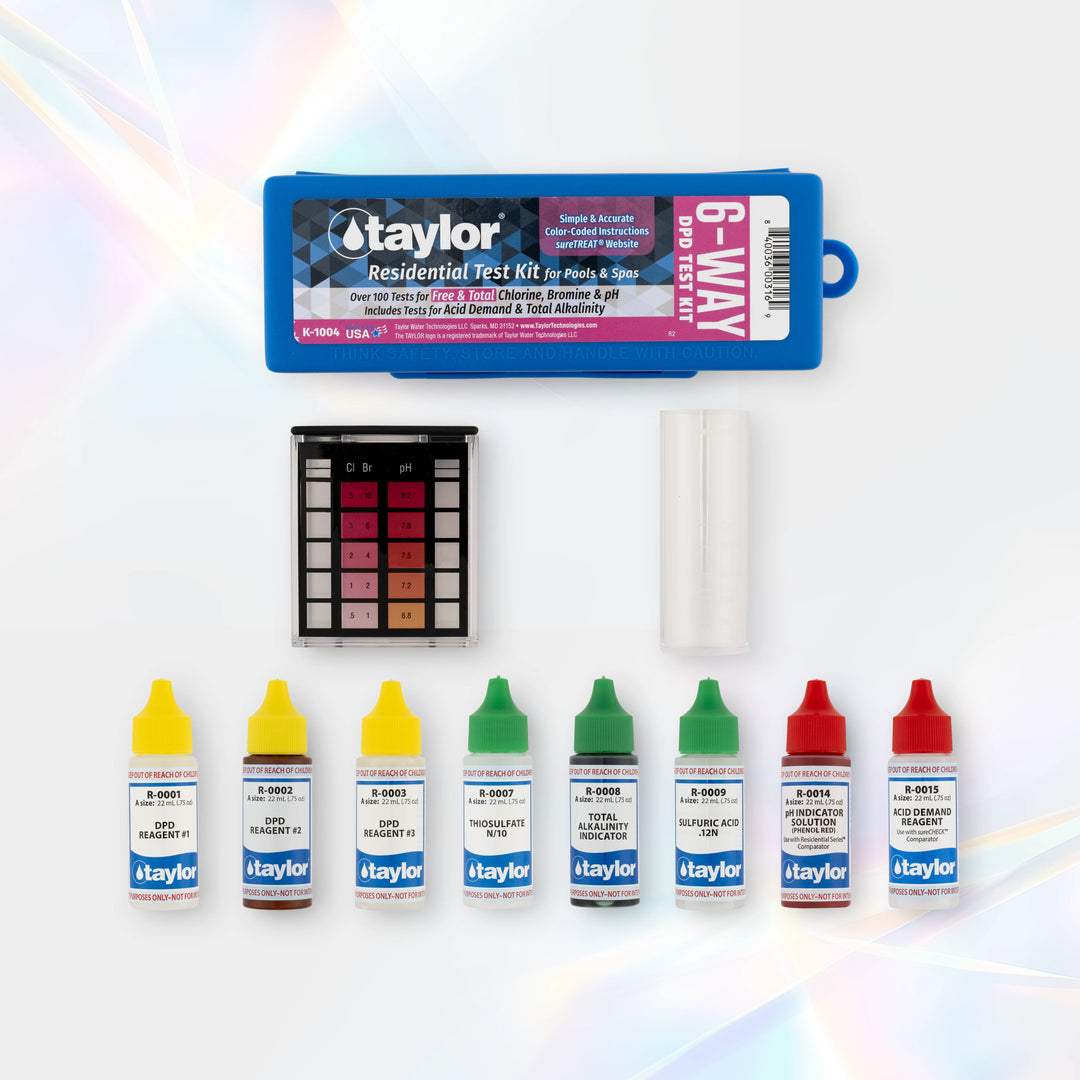
Accurately measuring your current levels is the only way to know which chemicals to add without over-treating your water.
Highly Recommended
Adding a preventative dose of algaecide weekly provides a secondary layer of defense when your sanitizer levels naturally dip.
Pro Tip: Don't Forget
These specialized formulas coagulate microscopic debris into larger clumps, allowing your filter to remove "cloudiness" that chemicals alone cannot fix.
Technician's Guide: Pool and Spa Chemicals for Water Maintenance +
The Science of a Perfect Swim
Maintaining your pool or spa isn't just about adding chlorine; it’s about managing a delicate ecosystem where chemistry meets comfort. Pool and Spa Chemicals are the tools you use to keep water safe, clear, and non-corrosive. When these levels are out of sync, you risk more than just green water—you risk skin irritation, cloudy "milk" water, and expensive damage to your heaters and pumps.
The secret to easy maintenance is the Langelier Saturation Index (LSI) logic: balancing your water so it is neither "hungry" (acidic/corrosive) nor "oversaturated" (scaling). By mastering the basics of Sanitizers, pH Balancers, and Alkalinity, you ensure that your chlorine works at 100% efficiency. Without proper balance, even a pool full of chlorine can still grow algae. This collection provides the professional-grade formulas needed to protect your family’s health and your backyard investment.
Common Questions +
Q: In what order should I add my maintenance chemicals?
A: Always start with Alkalinity first, as it acts as a "buffer" for your pH. Once alkalinity is set, adjust your pH Levels, and finally add your Sanitizer or shock.
Q: Why does my pool smell like strong chlorine if the levels are "fine"?
A: That "pool smell" is actually caused by Chloramines (combined chlorine), which form when chlorine is used up. It means you actually need more chlorine or a Pool Shock to break those bonds and refresh the water.
Q: Can I use pool chemicals in my hot tub/spa?
A: Generally, yes, but be cautious of concentration. Spas have much less water and higher temperatures, which causes chemicals like Bromine or chlorine to react faster. Always follow spa-specific dosing on the label.
Q: How often should I test my water chemistry?
A: For active pools, test for Chlorine and pH at least 2–3 times per week. Total Alkalinity and Calcium Hardness should be checked once a week or after heavy rain.
Q: What is the ideal pH range for a swimming pool?
A: You should aim for a pH Level between 7.4 and 7.6. This is the same pH as the human eye, ensuring maximum comfort and preventing equipment corrosion.