

Pool Water Balancers for Proper Chemical Balance


More about Pool Water Balancers for Proper Chemical Balance
Buyer's Guide: Pool Water Balancers for Proper Chemical Balance
Tier 1: The Stability Duo (Alkalinity & pH)
- Best For: Weekly maintenance and every-day comfort.
- Look For: [Alkalinity Increaser] (Sodium Bicarbonate) and [pH Adjusters] (Soda Ash or Dry Acid).
- Expectations: These are your most-used tools. They keep the water "steady" and ensure your eyes don't sting after a swim.
Tier 2: The Protection Pair (Calcium & Stabilizer)
- Best For: Long-term protection of your pool’s physical surfaces (plaster/liner) and your chlorine budget.
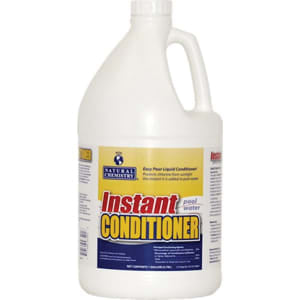
- Look For: [Calcium Hardness Increaser] and [Chlorine Stabilizer] (Cyanuric Acid).
- Expectations: High-impact, low-frequency. You add these less often, but they prevent the most expensive types of damage (etched plaster or total chlorine loss).
Tier 3: The Correction Specialist (Neutralizers)
- Best For: Over-shocked pools or preparing for a drain/refill.
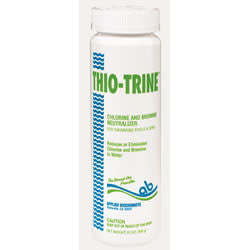
- Look For: [Chlorine Neutralizer] (Sodium Thiosulfate).
- Expectations: The "Undo Button." Use this only when your levels are dangerously high or when local laws require dechlorinated water for drainage.
Complete Your Pool Care Routine
Essential Pairing
Accurate testing is the prerequisite for balancing; you cannot balance what you haven't measured.
Highly Recommended
Balancing your water is done specifically to make your chlorine or bromine work effectively and last longer.
Pro Tip: Don't Forget
If your water is balanced but still cloudy or green, you'll need specialized treatments like algaecides or clarifiers to finish the job.
Technician's Guide: Pool Water Balancers for Proper Chemical Balance +
The Foundation of Crystal Clear Water.
Water balancing is the art of making sure your pool water is neither corrosive (acidic) nor scaling (base). When your water is "in balance," it is chemically inert—meaning it won't eat your heater or leave crusty white deposits on your tile. For a DIY homeowner, mastering Water Balancers is the secret to making your sanitizer work 2X as hard while spending half as much on "rescue" chemicals.
How it Works
Water balancing follows a specific scientific hierarchy. It isn't just about adding chemicals; it's about adding them in the correct order:
- Total Alkalinity: The "anchor" that prevents pH from swinging.
- pH Adjusters: The "comfort" level that prevents eye sting and protects equipment.
- Calcium Hardness: The "mineral" level that stops water from leaching stone and plaster.
- Stabilizers: The "sunscreen" that keeps your chlorine from evaporating.
- Neutralizers: The "emergency brake" for when levels get too high.
Why a Homeowner Needs It
Unbalanced water is the #1 cause of failed pool equipment. High pH makes chlorine "lazy," allowing algae to bloom even if your test kit says chlorine is present. Low alkalinity causes "pH bounce," making it impossible to keep the water steady. By keeping these five pillars in check, you ensure a "Swim-Ready" pool that feels soft on the skin and stays sparkling all season long.
Common Questions +
Q: In what specific order should I balance my chemicals?
A: Alkalinity first. Always. Because Alkalinity acts as a buffer for pH, adjusting it first often brings your pH into range naturally. Once Alkalinity is set, adjust pH, then Calcium Hardness, and finally Stabilizer.
Q: How often should I test my water balance?
A: You should test pH and Chlorine daily (or at least 3x a week). Alkalinity should be checked weekly, while Calcium Hardness and Stabilizer (CYA) only need to be tested once a month or after a massive rainstorm.
Q: Why is my chlorine disappearing even though I just added it?
A: You likely have low Stabilizer (Cyanuric Acid) levels. Without stabilizer, the sun can destroy 90% of your pool's chlorine in just two hours. Think of stabilizer as sunscreen for your water.
Q: Can I swim immediately after adding balancing chemicals?
A: For most balancers (like pH Up or Alkalinity Increaser), you can swim in 15 to 30 minutes as long as the pump is running. For Muriatic Acid (pH Down) or Calcium Hardness increaser, wait at least 2–4 hours for full circulation.
Q: Why does my pool water feel "harsh" or make my eyes red?
A: Most people blame chlorine, but "red eye" is usually caused by out-of-balance pH. If your pH is too low (acidic) or too high (basic), it irritates the mucous membranes in your eyes and nose.